While working through my coursework about digital learning experiences and learning to work on designing technology-integrated learning experiences the quote, “Be a Tour Guide, Not a Gatekeeper” (Mod. 2: Empowering Culture) has a way of imprinting in my memory, now hearing it twice. This pretty well sums up the themes in students becoming individual lifelong learners with technology at their fingertips.
What is so cool about integrating technology into the classroom is the endless possibilities and opportunities that it opens. Moving from front of the classroom instruction to individualized learning is how we move the next generation into an excellent group of life long learners. A teacher’s job is still to make sure their students hit the learning objective. We still need to know the foundations of each subject, but the path to achieving these learning objectives is changing with the ever growing world of technology. Our job shifts from controlling the information to guiding students to seek out learning on their own.
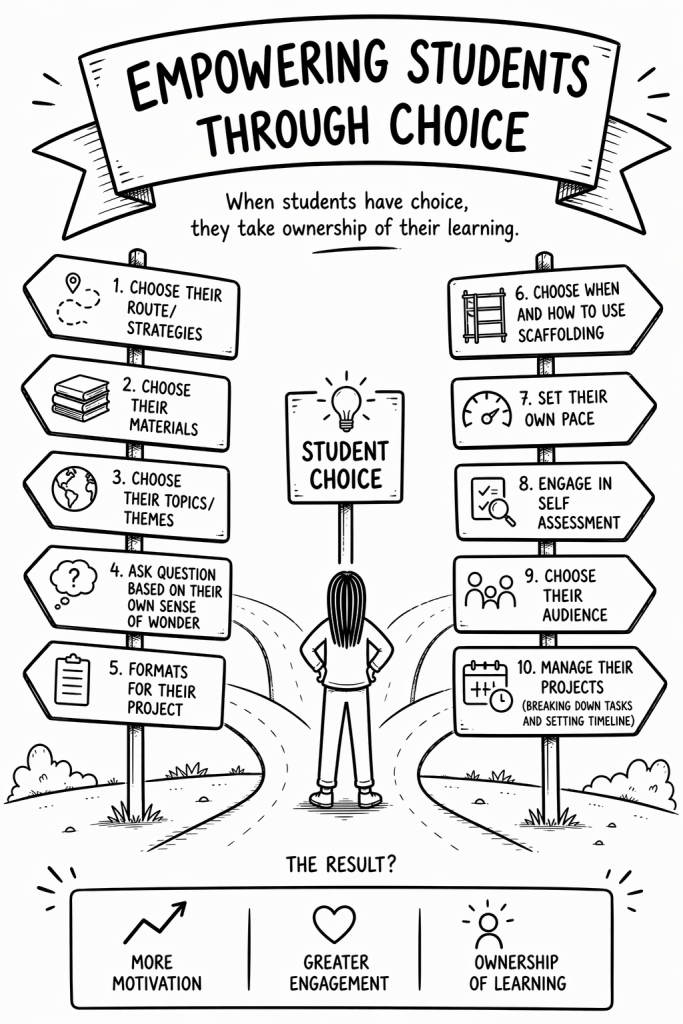
Introducing tools that will allow students to learn and grow on their own will enable them to start taking ownership of their learning. In the video, “10 Ways to Empower Students With Choice,” Mr. John Spencer shares how we can adjust the mindset of the activities and assignments in the classroom from requirements to an empowering learning experience. These are great steps to empowering students, but it’s vital that educators create the kind of culture in their classroom that fosters this adventurous path of learning.
The classroom needs to foster the best types of thinking, habits and attitudes, otherwise the culture won’t be prepared for student centered or digital learning (Mod 2: An Empowering Culture). This type of growth mindset, passion, and independence is not something that happens naturally, but is an environment that an educator needs to create in their classroom. Instilling these ideas into the creation of our classroom environment, lessons, and activities, will allow us to better achieve using the five types of meaningful learning in the classroom.


Leave a Reply